
Helping Autistic Adults Manage Burnout at Work

The workplace can be a source of immense pride, financial independence and personal fulfillment for adults with autism spectrum disorder (ASD). Yet, it can also be an environment filled with unique stressors such as sensory overload and complex social hierarchies.
Without adequate support, these stressors can lead to a state of physical, mental and emotional exhaustion known as burnout.
Unlike typical work-related stress, burnout for autistic individuals may involve a temporary loss of skills, increased sensory sensitivity and a significantly reduced capacity to cope with demands.
Understanding how to identify, manage and prevent burnout is essential for maintaining long-term career success as well as personal well-being.
In this article, we’ll discuss how to manage burnout, and how strategies from applied behavior analysis (ABA therapy) can be adapted for adults in the workplace.
Table Of Contents
Understanding the Cycle of Burnout
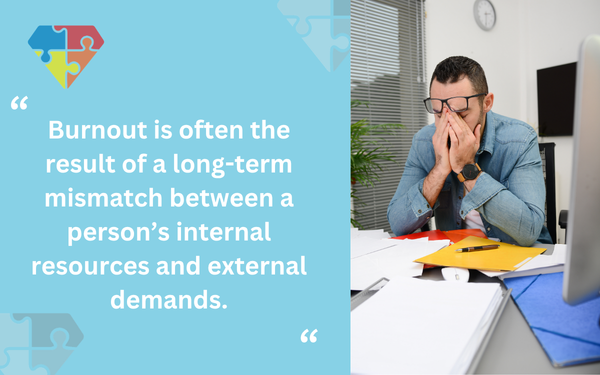
Burnout is often the result of a long-term mismatch between a person’s internal resources and external demands.
In a professional setting, this may stem from a person masking to suppress autistic behaviors or mimic neurotypical social cues to avoid stigma.
While masking may help an individual with autism manage through a meeting or a job interview, the energy required to sustain it is immense. When an adult is in burnout, they may find that tasks they previously handled with ease become suddenly overwhelming.
This can range from managing a noisy office to participating in small talk to even answering emails.
Recognizing the early warning signs of burnout can help autistic professionals get relief before they reach a point of total exhaustion.
How ABA Therapy Addresses Workplace Burnout
ABA therapy is a highly personalized framework. For adults, the focus is often on self-management, environmental modification and self-advocacy. Instead of a therapist directing the goals, the individual uses ABA therapy principles to analyze their own triggers and create a sustainable work routine.
The flexibility of these strategies allows for a tailored approach that respects the individual’s professional goals while protecting their mental health.
Strategies for Managing and Preventing Burnout
Managing burnout requires a proactive approach that balances immediate relief with long-term structural changes. Here are several ways autistic adults can use ABA therapy-inspired strategies to find balance.
Functional Communication and Self-Advocacy
ABA therapy prioritizes the ability to communicate needs effectively. In the workplace, this could mean self-advocating for reasonable accommodations.
You might ask for instructions in writing rather than verbally or request a desk in a quiet corner. Being clear and objective about what you need to be successful reduces the friction that leads to burnout.
Identifying High-Cost Behaviors
By following behavioral tracking, you can notice which tasks drain the most of your energy. If attending a morning meeting is draining for you, a professional might schedule a low-demand task immediately afterward, such as data entry or filing, so your nervous system can recalibrate.
Incorporating Scheduled Reinforcement
Reinforcement is used to help individuals learn new skills in ABA therapy, and it can also be used for maintaining endurance. Autistic adults can benefit from scheduling non-contingent reinforcement throughout the day, such as activities that are purely enjoyable and restorative.
This could be as simple as spending 10 minutes on a special interest or taking a walk outside, and it shouldn’t be contingent on how much work you have completed.
Self-Management and Pacing
An effective way to prevent burnout is to collect data on your own mood and energy levels. Doing this will help you see when you are approaching a “red zone.”
At this point, you can shift the strategy to demand reduction, or lowering expectations for a few days to prevent a full-scale burnout.
Blue Gems ABA Supports Lifelong Success
Burnout is a significant challenge, but it does not have to be the end of a rewarding career. By applying a structured, compassionate and analytical approach to the workplace, autistic adults can create environments where they thrive.
At Blue Gems ABA, we believe that the tools for success should evolve with the individual. Whether through direct support or educational resources, our goal is to empower the neurodivergent community to navigate every stage of life with confidence and dignity.
To learn more, please contact us today.
 617-297-7998
 617-340-3371


 English
  Spanish